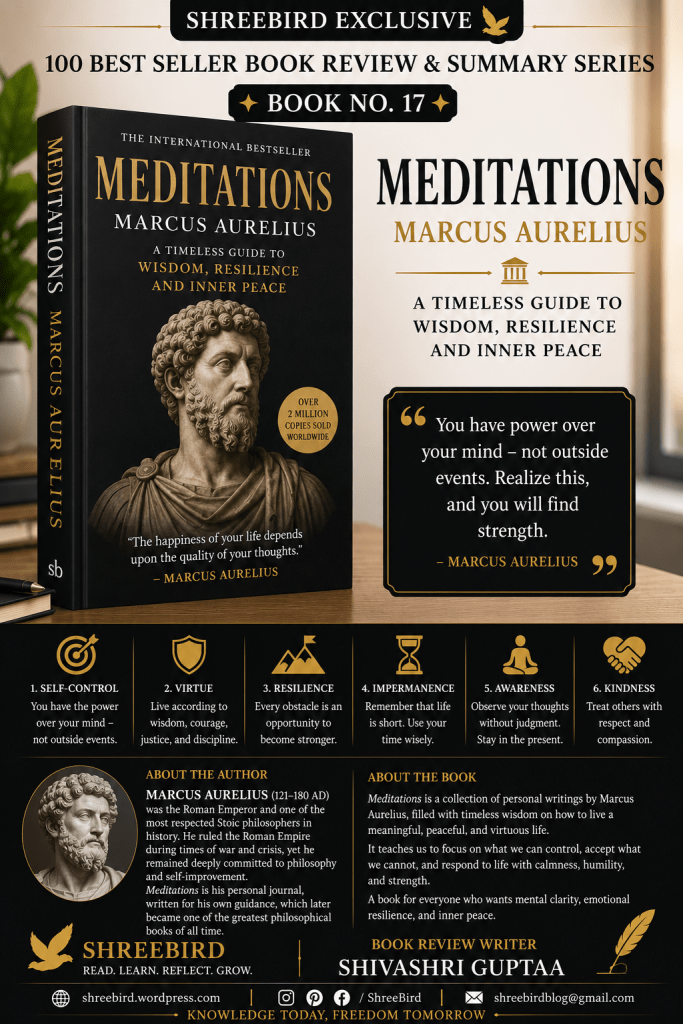
100 BEST SELLER BOOK REVIEW & SUMMARY SERIES
📖 Book No. 17
📘 Meditations
✍️ Author: Marcus Aurelius
━━━━━━━━━━━━━━━━━━━━━━━━━━━━━━━━━━━━━━
“The happiness of your life depends upon the quality of your thoughts.”
— Marcus Aurelius
━━━━━━━━━━━━━━━━━━━━━━━━━━━━━━━━━━━━━━
📖 About the Book
━━━━━━━━━━━━━━━━━━━━━━━━━━━━━━━━━━━━━━
Meditations is one of the greatest philosophical books ever written and a timeless masterpiece of Stoic philosophy.
Unlike most famous books, Meditations was never intended for publication.
It was Marcus Aurelius’ personal journal—a collection of private reflections, life lessons, and reminders he wrote to himself while ruling the Roman Empire.
For nearly two thousand years, this remarkable work has inspired emperors, philosophers, military leaders, entrepreneurs, psychologists, athletes, and millions of readers around the world.
The book teaches readers how to remain calm during difficult times, control emotions, accept uncertainty, focus on what truly matters, and live a life guided by wisdom, discipline, humility, and virtue.
Even in today’s fast-paced world, its lessons remain surprisingly practical and relevant.
━━━━━━━━━━━━━━━━━━━━━━━━━━━━━━━━━━━━━━
✍️ About the Author
━━━━━━━━━━━━━━━━━━━━━━━━━━━━━━━━━━━━━━
Marcus Aurelius (121–180 AD) was the Roman Emperor from 161 to 180 AD and is remembered as one of history’s greatest philosopher-kings.
Despite leading one of the world’s most powerful empires during wars, political crises, and personal tragedies, Marcus Aurelius remained deeply committed to philosophy and self-improvement.
He followed Stoicism—a philosophy that teaches self-control, rational thinking, resilience, and acceptance of life’s challenges.
His personal writings were later compiled into the book Meditations, which is now considered one of the most influential works on philosophy, leadership, and emotional intelligence.
━━━━━━━━━━━━━━━━━━━━━━━━━━━━━━━━━━━━━━
📚 Book Summary
━━━━━━━━━━━━━━━━━━━━━━━━━━━━━━━━━━━━━━
The central message of Meditations is simple—
We cannot control everything that happens in life.
But we can always control our thoughts, attitudes, and actions.
Marcus Aurelius reminds readers that suffering often comes not from events themselves but from our interpretation of those events.
Instead of worrying about things beyond our control, we should focus on living with wisdom, courage, justice, discipline, and kindness.
The book encourages us to accept difficulties as opportunities for growth rather than reasons for despair.
It teaches that true peace comes from mastering our own mind, not from changing the world around us.
━━━━━━━━━━━━━━━━━━━━━━━━━━━━━━━━━━━━━━
⭐ Five Powerful Ideas From the Book
━━━━━━━━━━━━━━━━━━━━━━━━━━━━━━━━━━━━━━
① Control your mind—not external events.
② Focus only on what is within your control.
③ Every obstacle is an opportunity to grow.
④ Live according to virtue rather than pleasure.
⑤ Remember that life is temporary—use your time wisely.
━━━━━━━━━━━━━━━━━━━━━━━━━━━━━━━━━━━━━━
🌍 Why This Book Is Different
━━━━━━━━━━━━━━━━━━━━━━━━━━━━━━━━━━━━━━
Unlike motivational books that promise quick success, Meditations offers timeless wisdom that has remained relevant for nearly two thousand years.
There are no shortcuts, hacks, or formulas.
Instead, Marcus Aurelius teaches readers how to build inner strength, emotional resilience, humility, gratitude, and peace of mind.
This is not merely a philosophy book—
It is a practical guide for living a meaningful life.
━━━━━━━━━━━━━━━━━━━━━━━━━━━━━━━━━━━━━━
🪷 Similar Wisdom in Indian Philosophy
━━━━━━━━━━━━━━━━━━━━━━━━━━━━━━━━━━━━━━
The teachings of Meditations closely resemble many principles found in Indian philosophy.
The Bhagavad Gita teaches us to perform our duty without attachment to outcomes.
Buddhism emphasizes mindfulness, acceptance, and freedom from unnecessary suffering.
The Upanishads encourage self-awareness and inner peace.
Marcus Aurelius reaches remarkably similar conclusions through Stoic philosophy, showing that wisdom often transcends cultures and civilizations.
━━━━━━━━━━━━━━━━━━━━━━━━━━━━━━━━━━━━━━
📖 Why Should You Read This Book?
━━━━━━━━━━━━━━━━━━━━━━━━━━━━━━━━━━━━━━
This book is perfect for:
✔ Students
✔ UPSC & CGPSC Aspirants
✔ Entrepreneurs
✔ Business Leaders
✔ Working Professionals
✔ Spiritual Seekers
✔ Psychology Enthusiasts
✔ Anyone dealing with stress, anxiety, uncertainty, or overthinking
✔ Anyone seeking emotional resilience and inner peace
━━━━━━━━━━━━━━━━━━━━━━━━━━━━━━━━━━━━━━
💬 Inspiring Quote
━━━━━━━━━━━━━━━━━━━━━━━━━━━━━━━━━━━━━━
“You have power over your mind—not outside events.
Realize this, and you will find strength.”
— Marcus Aurelius
━━━━━━━━━━━━━━━━━━━━━━━━━━━━━━━━━━━━━━
🌱 SHREEBIRD Reflection
━━━━━━━━━━━━━━━━━━━━━━━━━━━━━━━━━━━━━━
Meditations is not simply a philosophy book.
It is a conversation between a ruler and his own conscience.
Marcus Aurelius reminds us that the greatest victory is not conquering kingdoms—
It is conquering our own ego, fear, anger, and desires.
Nearly two thousand years later, his wisdom continues to guide millions toward a calmer, wiser, and more meaningful life.
━━━━━━━━━━━━━━━━━━━━━━━━━━━━━━━━━━━━━━
“Waste no more time arguing what a good man should be. Be one.”
— Marcus Aurelius
━━━━━━━━━━━━━━━━━━━━━━━━━━━━━━━━━━━━━━
🛡️ Principle 1 – Control What You Can
━━━━━━━━━━━━━━━━━━━━━━━━━━━━━━━━━━━━━━
The foundation of Stoic philosophy is learning to distinguish between what is under our control and what is not.
We cannot control:
- Other people’s opinions
- The past
- The weather
- The economy
- Unexpected events
But we can always control:
✔ Our thoughts
✔ Our actions
✔ Our attitude
✔ Our choices
✔ Our response to difficulties
📌 Example
You fail an examination.
You cannot change the result.
But you can improve your preparation, develop new strategies, and attempt again with greater wisdom.
Marcus Aurelius teaches that peace begins when we stop fighting things beyond our control.
━━━━━━━━━━━━━━━━━━━━━━━━━━━━━━━━━━━━━━
⚔️ Principle 2 – Every Obstacle Is an Opportunity
━━━━━━━━━━━━━━━━━━━━━━━━━━━━━━━━━━━━━━
Life will always present difficulties.
Instead of asking,
“Why is this happening to me?”
Ask,
“What can this situation teach me?”
Every setback develops patience.
Every criticism improves character.
Every failure increases wisdom.
📌 Example
Thomas Edison failed thousands of times before inventing the electric light bulb.
Failure became his greatest teacher.
Marcus Aurelius believed that obstacles strengthen the human spirit.
━━━━━━━━━━━━━━━━━━━━━━━━━━━━━━━━━━━━━━
🧠 Principle 3 – Master Your Mind
━━━━━━━━━━━━━━━━━━━━━━━━━━━━━━━━━━━━━━
Our greatest enemy is often our own thinking.
Fear,
anger,
jealousy,
comparison,
and unnecessary worry disturb inner peace.
Marcus Aurelius reminds us that external events cannot harm our mind unless we allow them to.
A disciplined mind remains calm even during chaos.
━━━━━━━━━━━━━━━━━━━━━━━━━━━━━━━━━━━━━━
❤️ Principle 4 – Live According to Virtue
━━━━━━━━━━━━━━━━━━━━━━━━━━━━━━━━━━━━━━
According to Stoicism, success is not measured by wealth or fame.
True success is measured by character.
Marcus Aurelius identified four great virtues:
✔ Wisdom
✔ Courage
✔ Justice
✔ Self-discipline
A good life is built upon these qualities rather than external achievements.
━━━━━━━━━━━━━━━━━━━━━━━━━━━━━━━━━━━━━━
⏳ Principle 5 – Remember That Life Is Short
━━━━━━━━━━━━━━━━━━━━━━━━━━━━━━━━━━━━━━
Marcus Aurelius frequently reminds himself that life is temporary.
Instead of creating fear,
this awareness creates gratitude.
When we understand that time is limited,
we stop wasting it on unnecessary anger,
ego,
comparison,
and meaningless distractions.
Every day becomes precious.
━━━━━━━━━━━━━━━━━━━━━━━━━━━━━━━━━━━━━━
👑 Leadership Lessons
━━━━━━━━━━━━━━━━━━━━━━━━━━━━━━━━━━━━━━
Marcus Aurelius ruled one of history’s greatest empires.
Yet his writings reveal remarkable humility.
His leadership principles include:
✔ Serve people instead of seeking praise.
✔ Remain calm during crises.
✔ Accept criticism gracefully.
✔ Lead through personal example.
✔ Make decisions based on reason rather than emotion.
These principles continue to influence modern leaders, CEOs, military officers, and public servants.
━━━━━━━━━━━━━━━━━━━━━━━━━━━━━━━━━━━━━━
🌍 Real-Life Examples
━━━━━━━━━━━━━━━━━━━━━━━━━━━━━━━━━━━━━━
📌 During difficult military campaigns, Marcus Aurelius continued writing reflections that reminded him to remain patient and rational.
📌 Nelson Mandela spent twenty-seven years in prison but refused to let hatred control his mind.
📌 Mahatma Gandhi demonstrated that self-control and moral courage can become greater sources of strength than violence.
Each of these examples reflects the Stoic belief that true power comes from mastering oneself.
━━━━━━━━━━━━━━━━━━━━━━━━━━━━━━━━━━━━━━
🪷 Indian Perspective
━━━━━━━━━━━━━━━━━━━━━━━━━━━━━━━━━━━━━━
The philosophy of Marcus Aurelius shares remarkable similarities with Indian wisdom.
The Bhagavad Gita teaches us to perform our duty without attachment to success or failure.
Lord Krishna advises Arjuna to remain steady in both victory and defeat.
Buddha taught that suffering begins when we become attached to expectations.
Swami Vivekananda emphasized strength of character, fearlessness, and self-mastery.
Although separated by geography and culture, these traditions reach the same timeless truth—
Real peace comes from within.
━━━━━━━━━━━━━━━━━━━━━━━━━━━━━━━━━━━━━━
💬 Memorable Quotes from the Book
━━━━━━━━━━━━━━━━━━━━━━━━━━━━━━━━━━━━━━
“The soul becomes dyed with the color of its thoughts.”
“If it is not right, do not do it.
If it is not true, do not say it.”
“The best revenge is not to become like your enemy.”
“Very little is needed to make a happy life.”
“Accept whatever comes to you woven in the pattern of your destiny.”
━━━━━━━━━━━━━━━━━━━━━━━━━━━━━━━━━━━━━━
🌱 SHREEBIRD Reflection
━━━━━━━━━━━━━━━━━━━━━━━━━━━━━━━━━━━━━━
The first lessons of Meditations remind us that happiness is not something we chase.
It is something we create through our daily thoughts, choices, and actions.
When we stop trying to control everything outside ourselves and begin mastering our own mind,
life becomes calmer,
stronger,
and more meaningful.
━━━━━━━━━━━━━━━━━━━━━━━━━━━━━━━━━━━━━━
━━━━━━━━━━━━━━━━━━━━━━━━━━━━━━━━━━━━━━
“The best revenge is not to be like your enemy.”
— Marcus Aurelius
━━━━━━━━━━━━━━━━━━━━━━━━━━━━━━━━━━━━━━
🌿 What Did We Learn From This Book?
━━━━━━━━━━━━━━━━━━━━━━━━━━━━━━━━━━━━━━
Meditations is not a book about becoming rich, famous, or powerful.
It is a guide to becoming mentally strong, emotionally balanced, and morally wise.
Marcus Aurelius teaches us that happiness does not depend on circumstances.
Instead, it depends on how we choose to respond to those circumstances.
One of the greatest lessons from this book is that we cannot always control life, but we can always control our character.
Rather than chasing external success, Marcus encourages us to build an inner life based on wisdom, discipline, kindness, humility, and self-control.
Even after nearly 2,000 years, these lessons remain timeless and deeply relevant.
━━━━━━━━━━━━━━━━━━━━━━━━━━━━━━━━━━━━━━
⭐ 10 Biggest Lessons From the Book
━━━━━━━━━━━━━━━━━━━━━━━━━━━━━━━━━━━━━━
✔ Focus only on what you can control.
✔ Your thoughts shape your reality.
✔ Every obstacle carries an opportunity to grow.
✔ Live according to wisdom, courage, justice, and self-discipline.
✔ Never allow anger to control your actions.
✔ Time is limited—use it wisely.
✔ Practice gratitude every day.
✔ Judge yourself more than you judge others.
✔ External success means little without inner peace.
✔ The greatest victory is mastering yourself.
━━━━━━━━━━━━━━━━━━━━━━━━━━━━━━━━━━━━━━
📖 Why Should You Read This Book?
━━━━━━━━━━━━━━━━━━━━━━━━━━━━━━━━━━━━━━
This book is highly recommended for:
✔ Students
✔ UPSC & CGPSC Aspirants
✔ Entrepreneurs
✔ Civil Servants
✔ Business Leaders
✔ Corporate Professionals
✔ Teachers
✔ Spiritual Seekers
✔ Psychology Enthusiasts
✔ Anyone searching for peace, resilience, and purpose.
It is one of those rare books that becomes more meaningful every time you read it.
━━━━━━━━━━━━━━━━━━━━━━━━━━━━━━━━━━━━━━
👩 Women’s Perspective
━━━━━━━━━━━━━━━━━━━━━━━━━━━━━━━━━━━━━━
The wisdom of Meditations is universal.
For women balancing careers, family, education, business, or public service, its message is especially empowering.
Marcus Aurelius reminds us that true strength is not loud.
It is calm confidence.
This book encourages women to:
- Build emotional resilience.
- Develop self-respect rather than seeking constant approval.
- Respond thoughtfully instead of reacting emotionally.
- Lead with integrity and compassion.
- Stay focused on personal values even during difficult situations.
Inner confidence is one of the greatest forms of power.
━━━━━━━━━━━━━━━━━━━━━━━━━━━━━━━━━━━━━━
💬 Reader’s Perspective
━━━━━━━━━━━━━━━━━━━━━━━━━━━━━━━━━━━━━━
After reading Meditations, I felt that Marcus Aurelius was not writing to impress the world.
He was writing to improve himself.
That honesty makes this book extraordinary.
The lessons are simple but profound.
Instead of teaching us how to control others, the book teaches us how to control our own thoughts, emotions, and actions.
For me, this is not just a philosophy book.
It is a lifelong companion that can be opened during moments of confusion, stress, failure, or success.
Each reading offers a new lesson because our understanding grows with experience.
━━━━━━━━━━━━━━━━━━━━━━━━━━━━━━━━━━━━━━
🪷 Similar Wisdom in Indian Philosophy
━━━━━━━━━━━━━━━━━━━━━━━━━━━━━━━━━━━━━━
Reading Meditations often feels like reading timeless Indian spiritual wisdom in another cultural tradition.
The Bhagavad Gita teaches us to perform our duty without attachment to results.
Lord Krishna advises Arjuna to remain steady in success and failure.
Buddha teaches mindfulness, compassion, and freedom from attachment.
The Upanishads encourage self-knowledge as the highest form of wisdom.
Swami Vivekananda reminds us that the strongest person is the one who has conquered himself.
Marcus Aurelius arrives at the same conclusion through Stoicism—
Real freedom begins within.
━━━━━━━━━━━━━━━━━━━━━━━━━━━━━━━━━━━━━━
🌍 Interesting Facts About the Book
━━━━━━━━━━━━━━━━━━━━━━━━━━━━━━━━━━━━━━
📚 Meditations was never intended to be published. It was Marcus Aurelius’ private journal.
🏛️ It was written while he ruled the Roman Empire during military campaigns and political challenges.
🌍 Today, it is regarded as one of the greatest works of Stoic philosophy and has been translated into dozens of languages.
📖 Leaders, psychologists, entrepreneurs, athletes, military officers, and philosophers continue to study it for its timeless wisdom.
━━━━━━━━━━━━━━━━━━━━━━━━━━━━━━━━━━━━━━
🌟 My Personal Opinion
━━━━━━━━━━━━━━━━━━━━━━━━━━━━━━━━━━━━━━
In my opinion, Meditations is one of the most important books every person should read at least once in life.
It does not promise quick success or instant happiness.
Instead, it teaches something far more valuable—
How to remain peaceful in chaos,
humble in success,
strong in adversity,
and kind in every situation.
The book encourages readers to become better human beings before becoming successful professionals.
That is why its wisdom has survived for almost two millennia.
━━━━━━━━━━━━━━━━━━━━━━━━━━━━━━━━━━━━━━
⭐ SHREEBIRD Rating
━━━━━━━━━━━━━━━━━━━━━━━━━━━━━━━━━━━━━━
📖 Readability: ⭐⭐⭐⭐⭐
🧠 Philosophy & Wisdom: ⭐⭐⭐⭐⭐
🌿 Practical Life Lessons: ⭐⭐⭐⭐⭐
💙 Emotional Intelligence: ⭐⭐⭐⭐⭐
🌍 Timeless Relevance: ⭐⭐⭐⭐⭐
💡 Overall Recommendation: ⭐⭐⭐⭐⭐ (5/5)
━━━━━━━━━━━━━━━━━━━━━━━━━━━━━━━━━━━━━━
🌿 SHREEBIRD FINAL REFLECTION
━━━━━━━━━━━━━━━━━━━━━━━━━━━━━━━━━━━━━━
“Marcus Aurelius reminds us that life is unpredictable, but our character is always our choice.
When we stop fighting every difficulty and start learning from it, life becomes lighter.
When we stop chasing approval and start living with integrity, confidence grows naturally.
The greatest kingdom is not the Roman Empire.
The greatest kingdom is the one within your own mind.
Master your thoughts,
live with virtue,
serve others with kindness,
and every day becomes a step toward a meaningful life.”
— SHREEBIRD
━━━━━━━━━━━━━━━━━━━━━━━━━━━━━━━━━━━━━━
📚 Next Book in the Series
📖 Book No. 18
The Psychology of Money
by Morgan Housel
Read more premium book reviews, summaries, quotes, and life lessons at:
🌐 https://shreebird.wordpress.com
━━━━━━━━━━━━━━━━━━━━━━━━━━━━━━━━━━━━━━
🕊️ SHREEBIRD
100 BEST SELLER BOOK REVIEW & SUMMARY SERIES
✍️ Book Review Writer
SHIVASHRI GUPTAA
🌐 Website:
https://shreebird.wordpress.com
Read • Learn • Reflect • Grow
© SHREEBIRD
━━━━━━━━━━━━━━━━━━━━━━━━━━━━━━━━━━━━━━


टिप्पणी करे