What if some conspiracy theories aren’t completely crazy?
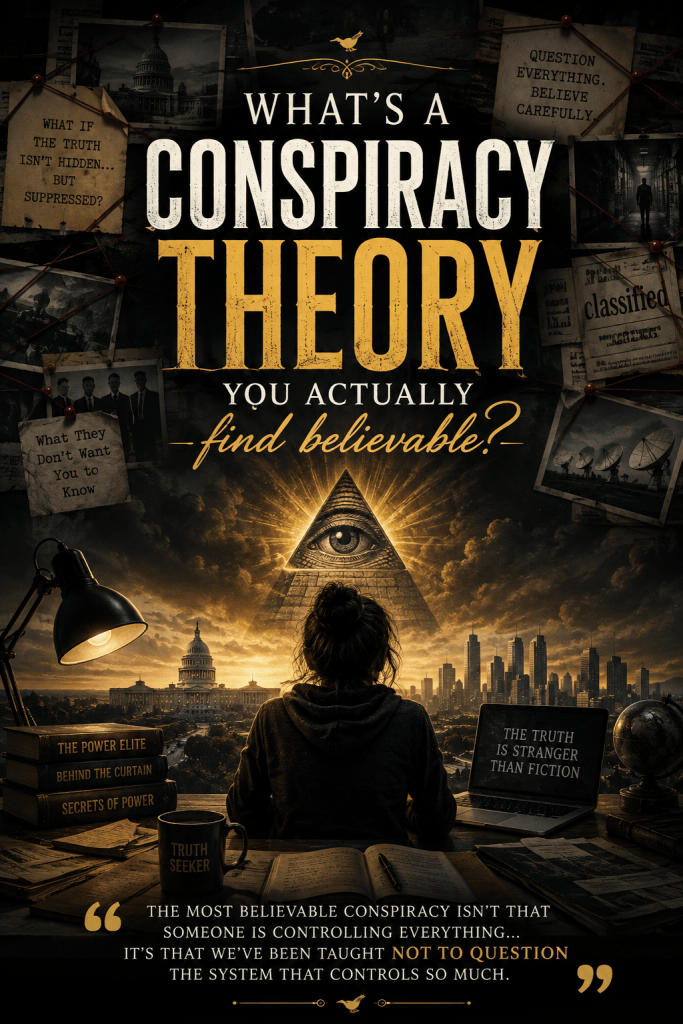
What if the truth isn’t always hiding in a dark room with people wearing black suits?
What if sometimes…
the truth is hiding in plain sight?
I have always found conspiracy theories fascinating.
Not because I believe every strange story I read on the internet.
Definitely not.
Moon landing theories?
Aliens secretly controlling governments?
The Earth being flat?
No, thank you. 😂
But there is one broader conspiracy theory that I actually find believable:
“POWERFUL INSTITUTIONS SOMETIMES KNOW MORE THAN THEY TELL US.”
And honestly…
History gives us enough examples to make this thought uncomfortable.
Because sometimes something sounds like a conspiracy theory…
until documents are released.
Until investigations happen.
Until whistleblowers speak.
Until governments admit it.
And suddenly the sentence changes from:
“That’s just a conspiracy theory.”
to:
“Wait… THAT ACTUALLY HAPPENED?”
━━━━━━━━━━━━━━━━━━━━━━
🕯️ NOT EVERY CONSPIRACY THEORY IS TRUE
Let’s start here.
I don’t think every conspiracy theory is true.
In fact, most probably aren’t.
Humans are naturally attracted to patterns.
When something terrible happens, our brain wants an explanation.
We don’t like randomness.
We don’t like uncertainty.
We want someone to blame.
And that’s where conspiracy theories can become dangerous.
A complicated event happens…
and suddenly someone creates a simple story:
“They planned everything.”
But reality is usually much messier.
Sometimes there isn’t a mastermind.
Sometimes there isn’t a secret room.
Sometimes there isn’t a 50-year-old plan.
Sometimes…
THINGS JUST HAPPEN.
But here’s the interesting part:
The existence of ridiculous conspiracy theories doesn’t mean ALL conspiracy theories are ridiculous.
“Skepticism doesn’t mean believing nothing.
It means refusing to believe something simply because you want it to be true.”
━━━━━━━━━━━━━━━━━━━━━━
🔐 THE CONSPIRACY I FIND BELIEVABLE
My answer isn’t:
“The government controls everything.”
That’s too simplistic.
My answer is much more ordinary—and therefore much more believable:
POWERFUL PEOPLE AND INSTITUTIONS SOMETIMES HIDE INFORMATION WHEN THAT INFORMATION COULD HURT THEIR INTERESTS.
Think about it.
Would a government always want citizens to know every secret operation?
Would a corporation voluntarily announce every mistake it makes?
Would a powerful organisation immediately reveal information that could damage its reputation?
Would people in positions of power always choose transparency over self-preservation?
Human nature makes me doubtful.
Power creates incentives.
Money creates incentives.
Reputation creates incentives.
And sometimes…
secrecy becomes part of the system.
━━━━━━━━━━━━━━━━━━━━━━
📂 WHEN “CONSPIRACY THEORY” BECAME FACT
This is where history becomes fascinating.
There are several examples where things that sounded unbelievable at one point were later confirmed through documents, investigations or admissions.
Take the CIA’s MKULTRA program.
For years, many people would have found it difficult to believe that a major intelligence agency had conducted secret experiments involving drugs and human behaviour.
But MKULTRA was real.
It wasn’t an internet rumour.
It was a documented program.
Or take the Watergate scandal.
Imagine telling someone before the scandal became public:
“People connected to the government are secretly involved in breaking into a political opponent’s headquarters, and then there will be an attempt to cover it up.”
It would sound like a political thriller.
Except it happened.
Or consider the revelations surrounding mass electronic surveillance.
Before Edward Snowden’s disclosures, many ordinary people had no idea about the scale of certain government surveillance capabilities.
The point isn’t:
“Therefore every conspiracy theory is true.”
The point is something much more interesting:
SOMETIMES THE WORLD REALLY IS STRANGER THAN WE THINK.
━━━━━━━━━━━━━━━━━━━━━━
👀 THE MOST BELIEVABLE CONSPIRACY ISN’T ALWAYS A SECRET
And this is where I think conspiracy theories get especially interesting.
Maybe the biggest “conspiracy” isn’t that someone secretly controls the entire world.
Maybe it’s that powerful systems influence us WITHOUT US EVEN REALISING HOW MUCH.
Think about social media.
You open your phone for five minutes.
Suddenly it’s been forty minutes.
One video becomes another.
One notification becomes another.
One outrage becomes another.
One advertisement becomes another.
And eventually you wonder:
“Did I choose this…
or was I guided towards it?”
That’s not science fiction.
Modern digital platforms are explicitly designed around attention, engagement and personalisation.
The conspiracy isn’t:
“Your phone is secretly controlling your brain.”
The more realistic version is:
“Companies have enormous amounts of information about what captures your attention—and they use that information to keep you engaged.”
And somehow…
that feels even more fascinating.
━━━━━━━━━━━━━━━━━━━━━━
📱 THE STRANGE CASE OF “I WAS JUST THINKING ABOUT IT”
We’ve all experienced this.
You talk about something.
Search for something.
Look at something once.
And suddenly…
IT’S EVERYWHERE.
You see the advertisement.
You see Instagram recommendations.
You see YouTube suggestions.
You see similar products.
And you think:
“ARE THEY LISTENING TO ME?”
Sometimes there are perfectly ordinary explanations.
Search history.
Cookies.
Location signals.
Browsing behaviour.
Purchases.
Similar interests.
Algorithms.
Data brokers.
Cross-platform tracking.
Our digital footprints are enormous.
So perhaps the real conspiracy isn’t:
“Your phone is secretly listening to every conversation.”
It’s much more uncomfortable:
“YOU HAVE ALREADY GIVEN AWAY FAR MORE INFORMATION THAN YOU REALISE.”
“The most powerful surveillance system is the one people willingly carry in their pockets.”
━━━━━━━━━━━━━━━━━━━━━━
🧠 WHAT IF THE ALGORITHM KNOWS YOU BETTER THAN YOU KNOW YOURSELF?
Imagine this.
You don’t consciously know why you keep watching certain videos.
But an algorithm notices:
You stop scrolling when you see a particular type of content.
You watch certain videos until the end.
You replay certain topics.
You click particular thumbnails.
You spend longer on certain posts.
After thousands of signals…
the system can make surprisingly good predictions about what you will probably click next.
That’s fascinating.
And slightly terrifying.
Because we often think:
“I am choosing what I consume.”
But sometimes the choice is happening inside an environment specifically designed to influence our choices.
Not mind control.
Not a secret cabal.
Something much more ordinary.
BEHAVIOURAL DESIGN.
━━━━━━━━━━━━━━━━━━━━━━
💰 FOLLOW THE MONEY
There is another principle I find incredibly useful whenever I hear a conspiracy theory:
FOLLOW THE MONEY.
Not because money explains everything.
But because incentives matter.
Suppose a company knows that revealing a particular problem could cost it billions.
What would you expect?
Perfect honesty?
Or lawyers, PR teams, internal investigations and carefully worded statements?
Suppose a government knows that revealing a particular intelligence operation could compromise national security.
Would every detail immediately become public?
Probably not.
Suppose a pharmaceutical company discovers a problem with a product.
Would it have an incentive to investigate and disclose it?
Yes.
Would it also have incentives to protect its reputation and financial interests?
Also yes.
Humans are complicated.
Institutions are complicated.
And incentives shape behaviour.
That’s why I find this explanation much more believable than:
“ONE SECRET GROUP CONTROLS EVERYTHING.”
━━━━━━━━━━━━━━━━━━━━━━
🎭 THE REAL CONSPIRACY MAY BE HUMAN NATURE
Perhaps we don’t need a mysterious organisation.
We already have something powerful enough:
HUMAN NATURE.
People protect their careers.
People protect their reputations.
People protect their families.
Companies protect profits.
Governments protect national interests.
Institutions protect themselves.
Politicians protect power.
And sometimes…
people hide things.
Not necessarily because they are evil.
Sometimes because they are afraid.
Sometimes because they are ambitious.
Sometimes because they think the public “isn’t ready.”
Sometimes because revealing the truth would create chaos.
Sometimes because admitting a mistake is harder than defending it.
And sometimes…
because money is involved.
“You don’t need a secret society to create secrecy. Sometimes ordinary incentives are enough.”
━━━━━━━━━━━━━━━━━━━━━━
📰 THE MEDIA CONSPIRACY
Here’s another thought.
I don’t believe there is one secret organisation controlling every news channel in the world.
But I absolutely believe that information can be shaped by incentives.
Imagine two headlines:
“Economic Policy Creates Complicated Long-Term Structural Changes.”
Not very clickable.
Now imagine:
“GOVERNMENT POLICY COULD DESTROY YOUR FUTURE!”
Click.
Anger.
Shares.
Comments.
Engagement.
Attention.
And attention is valuable.
This doesn’t necessarily mean journalists are lying.
It means the modern information ecosystem rewards certain kinds of stories.
Fear travels faster.
Anger travels faster.
Outrage travels faster.
Nuance?
Nuance rarely goes viral.
And maybe that’s one of the most important conspiracies we should worry about:
NOT THAT SOMEONE IS HIDING INFORMATION…
BUT THAT WE ARE BEING FLOODED WITH SO MUCH INFORMATION THAT IT BECOMES DIFFICULT TO KNOW WHAT MATTERS.
━━━━━━━━━━━━━━━━━━━━━━
🌐 THE INTERNET DIDN’T DESTROY CONSPIRACY THEORIES
It supercharged them.
Earlier, a conspiracy theory might travel through:
A newspaper.
A rumour.
A neighbour.
A political speech.
A small group.
Today?
One person can create a theory at 2 AM…
and millions can see it before breakfast.
One edited video.
One misleading screenshot.
One anonymous post.
One dramatic headline.
And suddenly…
THOUSANDS OF PEOPLE ARE INVESTIGATING SOMETHING THAT MAY NEVER HAVE HAPPENED.
That’s why critical thinking is more important than ever.
Not because we should believe institutions blindly.
But because we shouldn’t believe strangers blindly either.
━━━━━━━━━━━━━━━━━━━━━━
🤔 SO HOW DO I DECIDE WHAT TO BELIEVE?
This is my personal rule.
I don’t ask:
“Does this sound crazy?”
I ask:
“WHAT IS THE EVIDENCE?”
If someone makes a huge claim, I want a huge amount of evidence.
Who is making the claim?
What is the source?
Are there primary documents?
Are independent sources reporting the same thing?
Is there evidence against the theory?
Can the claim be falsified?
Does the explanation require hundreds of people to remain silent for decades?
Does it depend on one anonymous internet post?
And most importantly:
AM I BELIEVING THIS BECAUSE IT IS TRUE…
OR BECAUSE IT IS EXCITING?
━━━━━━━━━━━━━━━━━━━━━━
🚨 THE “EVERYTHING IS CONNECTED” TRAP
This is where conspiracy thinking can become dangerous.
You find three strange coincidences.
You connect them.
Then you find five more.
Soon everything is connected.
A celebrity.
A politician.
A company.
A war.
A historical event.
A random photograph.
And suddenly you’ve created a giant web of connections.
But correlation isn’t causation.
Sometimes coincidences really are coincidences.
The human brain is brilliant at finding patterns.
Sometimes…
TOO brilliant.
“A pattern is not proof merely because it looks beautiful.”
━━━━━━━━━━━━━━━━━━━━━━
🕵️♀️ BUT WHAT IF THE TRUTH REALLY IS HIDDEN?
Then the answer isn’t blind belief.
It is INVESTIGATION.
That’s what I love about the idea of being a curious person.
You don’t have to immediately say:
“TRUE!”
And you don’t have to immediately say:
“IMPOSSIBLE!”
You can say:
“INTERESTING. LET’S FIND OUT.”
That’s a much healthier relationship with uncertainty.
You can remain curious without becoming gullible.
Skeptical without becoming cynical.
Open-minded without abandoning logic.
And that’s where I think the best kind of conspiracy thinking lives.
━━━━━━━━━━━━━━━━━━━━━━
🌙 THE CONSPIRACY THEORY I WOULD RATHER BELIEVE
If I had to choose one conspiracy theory that I actually find believable, it would be this:
THERE ARE MANY THINGS ABOUT OUR WORLD THAT POWERFUL INSTITUTIONS KNOW, UNDERSTAND OR CONTROL BETTER THAN ORDINARY PEOPLE REALISE.
Not everything.
Not always.
Not through one giant secret organisation.
But through:
Information.
Money.
Technology.
Data.
Access.
Influence.
And incentives.
And honestly…
I don’t find that shocking.
I find it human.
Every powerful institution in history has had information that ordinary people didn’t have.
Kings had spies.
Empires had intelligence networks.
Governments had classified information.
Companies have trade secrets.
Scientists have unpublished research.
And today?
We have algorithms, massive datasets and digital surveillance capabilities.
The technology has changed.
THE HUMAN DESIRE FOR POWER AND INFORMATION HASN’T.
━━━━━━━━━━━━━━━━━━━━━━
🌟 THE BIGGER QUESTION ISN’T “WHO IS CONTROLLING EVERYTHING?”
Maybe the better question is:
“HOW MUCH INFLUENCE DO WE ALLOW OTHER PEOPLE AND SYSTEMS TO HAVE OVER OUR THINKING?”
Because that’s something we can actually control.
We can question.
We can read.
We can verify.
We can compare sources.
We can change our minds.
We can say:
“I WAS WRONG.”
And honestly?
That’s intellectual strength.
Not weakness.
━━━━━━━━━━━━━━━━━━━━━━
🪶 WHAT I LEARNED FROM CONSPIRACY THEORIES
The biggest lesson conspiracy theories have taught me isn’t:
“Trust no one.”
It’s:
“DON’T GIVE YOUR THINKING AWAY.”
Don’t blindly trust governments.
Don’t blindly trust corporations.
Don’t blindly trust influencers.
Don’t blindly trust news channels.
Don’t blindly trust viral posts.
And don’t blindly trust conspiracy theorists either.
Because the moment you stop questioning…
someone else starts doing your thinking for you.
“The goal isn’t to believe everything.
The goal isn’t to doubt everything.
The goal is to THINK FOR YOURSELF.”
━━━━━━━━━━━━━━━━━━━━━━
✨ MAYBE THE MOST DANGEROUS CONSPIRACY IS THE ONE WE NEVER QUESTION
Perhaps the most believable conspiracy isn’t hiding underground.
It’s sitting right in front of us.
The idea that:
“We don’t need to understand how the system works.”
That algorithms don’t influence us.
That incentives don’t shape institutions.
That money doesn’t affect decisions.
That powerful people never hide information.
That technology is always neutral.
That everything we see online must be true.
THOSE ARE THE ASSUMPTIONS I WOULD QUESTION FIRST.
━━━━━━━━━━━━━━━━━━━━━━
🌿 A SHREEBIRD THOUGHT
I don’t want to live in a world where I believe every conspiracy theory.
But I also don’t want to live in a world where I automatically dismiss every uncomfortable question.
Because history has repeatedly taught us something fascinating:
Sometimes the impossible is impossible.
Sometimes the unbelievable is unbelievable.
And sometimes…
THE UNBELIEVABLE IS TRUE.
The difference is not imagination.
The difference is EVIDENCE.
So the next time someone tells you:
“That’s just a conspiracy theory.”
Don’t immediately believe them.
And don’t immediately believe the theory either.
Just smile and ask:
“WHAT’S THE EVIDENCE?”
Because curiosity asks questions.
Intelligence checks evidence.
Wisdom knows when to say:
“I DON’T KNOW YET.”
And perhaps that is the most powerful position of all.
━━━━━━━━━━━━━━━━━━━━━━
💭 WHAT DO YOU THINK?
What’s one conspiracy theory that you don’t completely believe…
but also don’t completely dismiss?
Maybe it’s about governments.
Technology.
Corporations.
History.
Aliens.
The media.
Or something completely different.
Tell me.
Because sometimes the most interesting conversations begin with a question that sounds ridiculous…
and end with:
“WAIT A MINUTE… THAT’S ACTUALLY INTERESTING.”
━━━━━━━━━━━━━━━━━━━━━━
✍️ WRITTEN BY
SHIVASHRI GUPTAA
SHREEBIRD
🌐 WEBSITE:
https://shreebird.wordpress.com
🛍️ SHREEBIRD RECOMMENDED READS
Explore thought-provoking books, psychology, philosophy, history, critical-thinking books and fascinating reads through my Amazon affiliate recommendations.
🔗 AMAZON AFFILIATE LINK:
https://link.amazon/B03AID0Y8
Disclosure: Some recommendations may contain affiliate links. If you purchase through them, I may earn a small commission at no additional cost to you. Your support helps SHREEBIRD grow. ❤️
━━━━━━━━━━━━━━━━━━━━━━
🌿 SHREEBIRD
Stories • Ideas • Life • Culture • Soul
Read deeply.
Think freely.
Question everything.
Believe carefully.
Live consciously.
🐦 SHREEBIRD — WHERE EVERY STORY MAKES YOU THINK.
 मैं चिड़िया बनना चाहती हूं ...
टिप्पणी करे